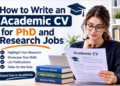












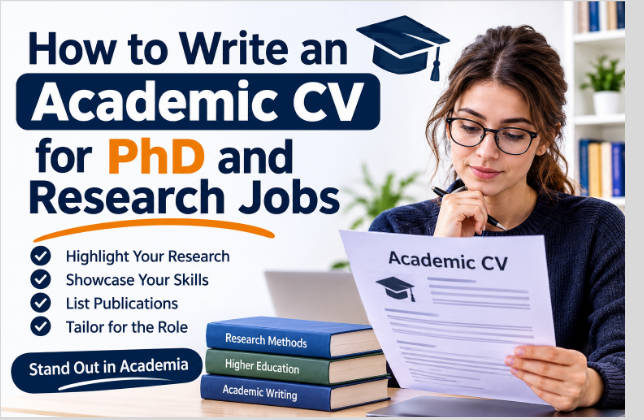
An academic CV is a different document from the two-page CV used in most industries. It’s usually longer, more detailed, and organised around research, teaching, and scholarly impact. Whether you’re applying for a PhD place, a postdoctoral position, or a lectureship in the UK or Ireland, the way you structure it can influence how seriously a selection panel takes your application.
This guide explains what to include, how to organise it, and the most common mistakes to avoid.
How an Academic CV Differs From a Standard CV
A standard CV is a short marketing document. An academic CV is closer to a full record of your scholarly career. Length is less of a concern: early-career researchers often have two to four pages, while established academics may have far more. What matters is that the structure is clear and the most relevant achievements are easy to find.
Panels also read academic CVs differently. They look for evidence of research output, funding, teaching, supervision, and fit with the department. Because the priorities are so specialised, some applicants seek CV Consultants for Personalised support so that each section is shaped around the specific post rather than a generic template.
Core Sections to Include
- Personal and contact details. Name, email, institution, and links to your research profiles, such as ORCID, Google Scholar, or a personal website.
- Research profile or statement. A short paragraph on your research area, methods, and what you aim to achieve. Keep it specific.
- Education. Degrees in reverse order, with thesis or dissertation titles and supervisors. For PhD applications, include your master’s research project and any distinction.
- Publications. List peer-reviewed articles, book chapters, and conference papers using a consistent citation style. Separate published work from work under review or in preparation.
- Research experience. Roles, projects, methods, and outcomes. Describe your contribution clearly, especially in collaborative work.
- Funding, grants, and awards. Include amounts if appropriate, funding bodies, and your role, whether lead or co-applicant.
- Teaching and supervision. Courses taught, level, class size, and any teaching qualification. Include supervision of undergraduate or master’s projects.
- Conference presentations and invited talks.
- Professional service. Peer review, committee work, and society membership.
- Skills. Technical skills, software, languages, and laboratory or analytical methods.
- Referees. Usually two or three, with contact details.
Tailoring for PhD Applications
If you’re applying for a PhD, you may not have many publications. Focus on what you do have:
- Your master’s or final-year dissertation, with a clear summary of the research question and findings
- Relevant modules, projects, and lab or fieldwork experience
- Research assistant roles, even short ones
- Conference posters or presentations
- Awards, scholarships, and strong grades
- Technical skills linked to your proposed field
Alignment with the supervisor and department is crucial. Mention how your interests match their ongoing work, and make it easy for the panel to see why you’re a good fit.
Tailoring for Postdoctoral and Research Jobs
For postdoctoral roles, panels look for independence and momentum. Highlight first-author publications, successful grant applications, collaborations, and any methods or datasets you’ve developed. A short statement of future research plans, if invited, helps show where you’re heading. For research jobs outside universities, such as industry or public sector R&D, shorten the publication list and bring practical impact, tools, and results to the top.
Layout and Formatting Tips
- Use clear headings and a consistent citation style.
- Choose a readable font between 10 and 12 points.
- Put your strongest, most relevant achievements first within each section.
- Avoid graphics, colour blocks, and complex tables, especially if the application goes through an online system.
- Update the document regularly so it never falls behind your actual record.
Because the document is detailed, structure matters. Experienced CV writing specialists can reorganise a long academic record so that the most relevant items stand out while still meeting the formal expectations of academic panels.
Writing About Teaching and Impact
Many applicants undersell their teaching and public engagement. Instead of “taught tutorials,” say “led weekly tutorials for 40 second-year students and introduced weekly formative quizzes that improved attendance.” Include any outreach, public lectures, policy contributions, or industry partnerships. Funders and universities increasingly care about impact beyond publication, so show how your work has been used.
Your Online Research Presence
Panels often search for candidates online. Make sure your institutional page, ORCID, and professional profile are consistent with your CV. A clear headline, a concise research summary, and a list of key outputs help people find you. Many researchers work with linkedin profile experts to present their academic work in plain language that also appeals to industry recruiters, collaborators, and funders.
Moving Into Leadership Roles
As you advance to research group leader, head of department, or dean, your CV needs to reflect a broader scope. Panels look for strategic vision, budget responsibility, team building, and external partnerships. At that stage, the document starts to look more like a leadership profile than a list of publications. Some senior academics consult executive cv writers so their achievements in management, fundraising, and institutional change are described as clearly as their research.
Leaving Academia for Senior Industry Roles
Some experienced researchers decide to move into industry, policy, or consultancy. The academic CV doesn’t translate directly. You’ll need to convert publications into outcomes, grants into commercial or project management experience, and supervision into leadership. Applicants making this jump sometimes look for an executive resume writer for hire to rework a long academic record into a concise, business-focused document that employers outside universities can read quickly.
Common Mistakes to Avoid
- Listing everything without prioritising what’s relevant
- Mixing citation styles or leaving gaps in dates
- Burying the best achievements deep in the document
- Using vague statements such as “excellent researcher” without evidence
- Forgetting to update the CV for each application
- Ignoring the person specification or selection criteria
- Leaving out funding, teaching, or service because they seem minor
Senior Academic Appointments
For professorships and senior management posts, panels expect evidence of leadership at scale: research strategy, income generation, international standing, and mentoring. Professors and heads of school often turn to executive cv writing help so their records are shaped into a compelling, well-organised case for appointment.
Final Thoughts
A strong academic CV is accurate, well organised, and tailored to the post. It shows what you’ve achieved, how you work, and where you’re going. Start with the core sections, adapt them to the type of role you’re applying for, and keep refining as your career develops. A document that’s clear, current, and targeted will help your application stand out among many strong candidates.